Fish Scale Pattern: Decorative Structure for Impactful Design
There is an immediate, tactile quality to a fish scale pattern that draws the eye. It’s a visual rhythm that feels both organic and meticulously structured. When you encounter a well-executed Fish Scale Pattern. Decorative Structure, you’re not just seeing a repeating motif; you’re seeing a piece of design that carries weight, texture, and a distinct personality. This isn't a fleeting trend. It's a classic decorative element that, when used thoughtfully, can transform a flat surface into something dynamic and engaging.
Understanding the Visual Language
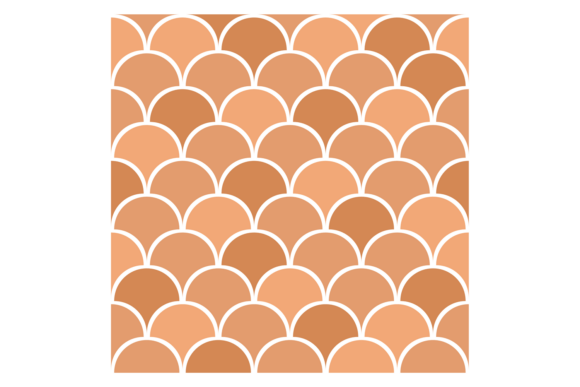
At its core, the fish scale pattern—often called scallop or ogee in design circles—is built from overlapping, curved shapes. The beauty of a premium decorative structure lies in its precision and the subtle interplay of light and shadow it suggests. A high-quality vector illustration, available in formats like EPS, SVG, and transparent PNG, captures this with crisp lines and perfect curves. The pattern can feel bold and graphic when using high-contrast colors, or it can evoke a sense of organic elegance with soft gradients and muted tones. Its personality is versatile: it can read as luxurious, playful, traditional, or modern depending on the context, color palette, and application.
This versatility is its greatest strength. Unlike a rigid geometric grid, the fish scale pattern has an inherent flow. It guides the viewer’s eye naturally across a surface, creating a sense of movement and cohesion. For a designer, this means it can be a powerful tool for establishing visual hierarchy. A section of a brochure or a website hero image framed by this pattern immediately commands attention and signals that the content within is curated and important.
Strategic Applications Across Projects
Knowing where to deploy a creative font or pattern is half the battle. The Fish Scale Pattern. Decorative Structure excels in scenarios where you need to inject character and texture without overwhelming the primary message. Think of it as a sophisticated background player or a standout hero element.
- Branding & Identity: This pattern can become a cornerstone of a brand identity. Imagine it as the textured background for a luxury cosmetics brand's packaging, or as a subtle embossed detail on high-end stationery. It conveys attention to detail and quality. For a small business, using it consistently across social media graphics, business cards, and a website creates a memorable and professional visual signature.
- Editorial & Publishing: In editorial design, such as magazine layouts or book covers, the pattern can create striking section dividers, chapter openers, or decorative borders. It adds a layer of richness to the visual hierarchy, separating content blocks elegantly. For digital publishers, it works beautifully as a background for pull quotes or author bios.
- Digital & Web Design: In web design, the pattern can be used sparingly for maximum effect. Consider it as a full-width background for a landing page, a textured header, or as an element in a parallax scrolling section. As a transparent PNG, it overlays other content with depth. Paired with a clean sans serif font, it creates a compelling contrast between the organic pattern and modern typography.
- Packaging & Product Design: This is where the pattern truly shines. It can turn ordinary packaging into something tactile and desirable. From artisanal food labels to boutique clothing tags, the decorative structure suggests craftsmanship. It’s also fantastic for surface design on products like ceramics, textiles, or wallpapers.
Making It Work: Practical Integration Tips
Adopting any strong design element requires a strategic approach. Here’s how to integrate a fish scale pattern effectively and maintain professionalism.
Evaluating Fit and Font Pairings
First, assess your project’s tone. Is your brand voice modern and minimalist, or ornate and traditional? The pattern can adapt, but its innate character should align with your message. Next, consider font pairing. The pattern is a strong visual statement, so your typography needs to complement it, not compete with it. A bold, simple display font for headlines can sit confidently atop the pattern. For body text, a highly legible serif font or sans serif font is essential to ensure readability. Avoid pairing it with overly decorative script fonts or handwritten fonts unless you’re aiming for a very specific, maximalist aesthetic.
Color, Scale, and Readability
Color is your primary tool for modulation. A monochromatic scheme using different tints of the same hue creates a subtle, textured effect perfect for backgrounds. A complementary color scheme makes the pattern pop as a foreground element. Always test your text contrast against the patterned background. The goal is readability; the pattern should enhance, not hinder, the user’s ability to consume your core content.
Scale is another critical factor. A large-scale fish scale pattern can feel bold and contemporary, while a smaller, tighter repeat feels more intricate and classic. Consider the viewing distance—a pattern for a billboard will differ from one for a business card.
Licensing and File Formats
When sourcing this design asset, pay close attention to the licensing. A commercial font or pattern license dictates how you can use it—whether for a single project, multiple clients, or in products for sale. For digital and print flexibility, ensure you get the necessary file formats. Vector illustrations (EPS, SVG) are infinitely scalable for any size. Transparent PNGs are ideal for layering in web and graphic design software. A high-resolution JPG is useful for certain print applications but lacks the flexibility of vectors.
Ultimately, the Fish Scale Pattern. Decorative Structure is more than a decorative whim. It’s a versatile tool in a designer’s arsenal for building texture, guiding the eye, and crafting a distinct brand personality. Used with intention, it elevates a project from ordinary to memorable, proving that some of the most effective design solutions are inspired by the timeless patterns found in nature.