Decorative Cloud in Asian Drawing Style: A Designer's Guide
There’s a specific kind of visual magic in the swirling, graceful forms of traditional Asian art, particularly in the depiction of clouds. They aren't just weather; they are symbols of transition, luck, and the heavens. The Decorative Cloud in Asian Drawing Style design asset captures this essence perfectly. It’s more than just a shape—it’s a cultural element with a distinct personality, offering a bridge between ancient symbolism and modern digital design. For creators looking to add a layer of authenticity, elegance, or whimsy to their work, this isolated element is a versatile and powerful tool.
Visual Characteristics and Inherent Personality
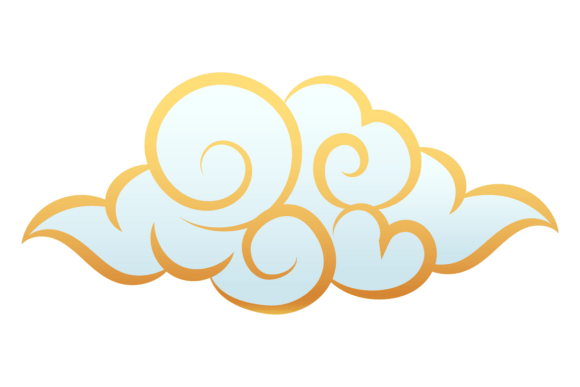
What defines this particular cloud style? It’s rooted in the flowing lines of calligraphy and the bold, graphic sensibilities of woodblock prints. You’ll notice a few key traits:
- Organic Flow: The edges are rarely perfectly round. They have a hand-drawn, undulating quality, often with small, curling tendrils or spiral motifs that give the cloud life and movement.
- Stylized Simplicity: Unlike a photorealistic cumulus cloud, this style is abstracted to its symbolic form. It’s instantly recognizable as a cloud but carries the clean, intentional line work of a premium font or display font.
- Cultural Resonance: The form is deeply embedded in Japanese culture element aesthetics and broader East Asian art. It speaks of tradition, mindfulness, and a certain poetic grace. This isn’t a generic swirl; it’s a shape with history.
The overall appeal lies in this blend of simplicity and depth. It can feel playful in one context and deeply serene in another. This duality makes the Decorative Cloud in Asian Drawing Style a surprisingly adaptable design asset, capable of enhancing a wide range of projects without overpowering the main message.
Where This Element Truly Shines: Applications Across Projects
Thinking about this cloud as just a clipart image would be a mistake. Its value is unlocked when you consider its role within a broader brand identity or creative project. Its strengths are most apparent in specific applications.
Branding and Logo Design
For businesses in wellness, travel, tea, ceramics, boutique hospitality, or any service emphasizing tranquility and quality, this cloud can become a cornerstone of the visual identity. Used as a subtle mark, a border element, or integrated into a logo design, it instantly communicates a specific set of values. It pairs exceptionally well with a clean sans serif font for contrast or a elegant serif font for a more traditional feel. The key is balance—the cloud provides the artistic flourish, while the typography handles clarity.
Digital and Editorial Design
In web design and social media graphics, this element excels at creating visual interest without clutter. Use it as a subtle background pattern, a decorative divider between sections, or an accent on a quote graphic. For editorial design—think magazine layouts, blog headers, or e-book covers—it can frame a title beautifully, adding a touch of cultural sophistication. Its transparent PNG format is particularly useful here, allowing it to layer seamlessly over text and images.
Packaging and Physical Products
Imagine this cloud on the packaging for artisanal goods, stationery, or cosmetics. It elevates the unboxing experience, suggesting care and artistry. For packaging design, the isolated vector formats (EPS, SVG) are invaluable. They allow you to scale the cloud to any size—from a tiny detail on a box flap to a large pattern on a gift bag—without losing a single ounce of sharpness. This ensures professionalism across all print applications.
Creative and Personal Projects
Beyond commercial use, the Decorative Cloud in Asian Drawing Style is a fantastic resource for crafters and hobbyists. Use it for scrapbooking, creating unique greeting cards, designing custom fabric patterns, or adding a special touch to handmade journals. Its personality injects immediate charm into personal creations.
Practical Guidance for Effective Use
Integrating any stylistic element requires thoughtful execution. Here’s how to make this asset work for you, not against you.
Evaluate the Project Fit. Does the cloud’s personality align with your project’s tone? It’s perfect for evoking calm, tradition, or whimsy. It might feel out of place in a project requiring a gritty, urban, or hyper-modern aesthetic. Always start by asking if the element’s inherent style supports your core message.
Master the Font Pairing. This is crucial. The cloud is a creative font in visual form—it’s decorative and full of character. To maintain readability and visual hierarchy, pair it with typefaces that are straightforward and functional. A sturdy sans serif font for body text or a classic serif font for headlines often creates the perfect counterpoint. Avoid pairing it with other highly ornate script fonts or handwritten fonts, as this will create visual competition and likely harm legibility.
Leverage the Format Variety. The asset’s availability in EPS, JPG, SVG, and transparent PNG is a major strength. Use the vector formats (EPS, SVG) for any print work or when you need infinite scalability. The transparent PNG is your go-to for digital overlays in design software or website builders. Choose the right tool for the job.
Consider Commercial Licensing. If you’re a entrepreneur, marketer, or small business owner using this in a commercial project—on products for sale, in client work, or in paid marketing materials—ensure the license permits this. Reputable design assets come with clear licensing terms. Respecting these terms is part of maintaining professionalism and avoiding legal headaches down the road.
Ultimately, the Decorative Cloud in Asian Drawing Style is more than a decorative motif. It’s a storyteller. Used with intention, it can significantly enhance audience engagement, contribute to a cohesive brand identity, and add a layer of meaningful artistry to your work. It proves that sometimes, the most powerful design choices are those that carry a whisper of history and culture within their lines.